
Waitaki River
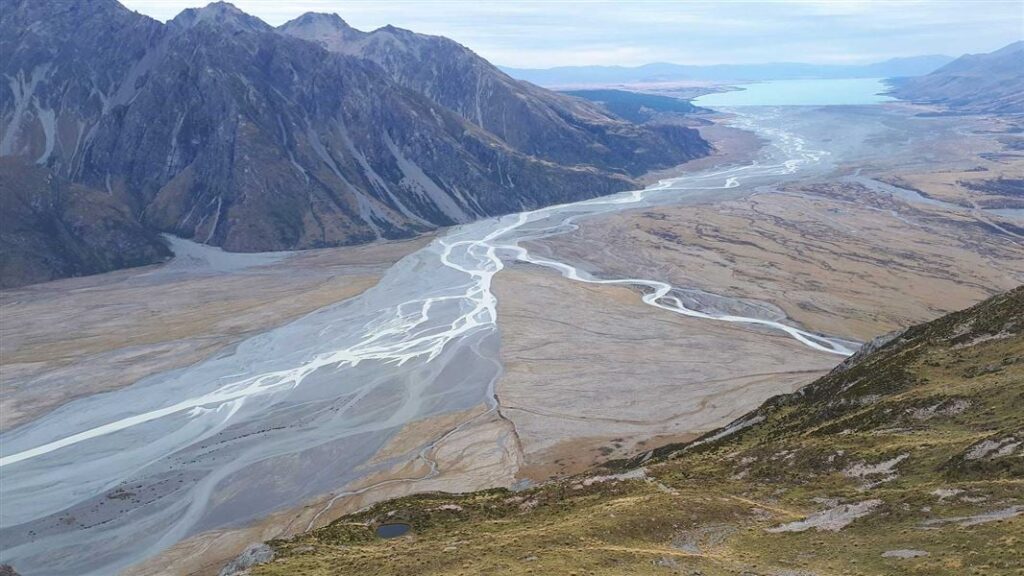
The Waitaki braided river is characterised by gravel beds, numerous channels and variable flows, which are unique to parts of the world with young, rapidly eroding mountains. The upper part of the Waitaki Basin was formed thousands of years ago when glaciers retreated, leaving behind beds of gravel and boulders.
Raki’s Railway Tunnel
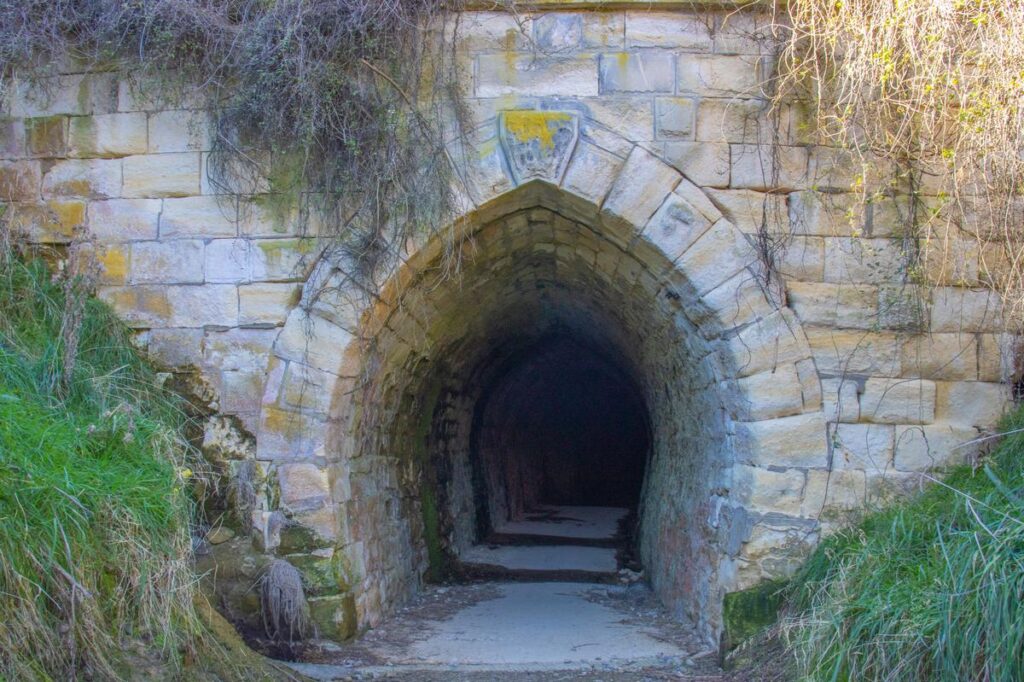
Time to whip out your torch & grab your raincoat as you prepare to walk through one of two tunnels of the old Tokarahi Railway branch which ran from 1887-1930. The tunnel is 100m long and get it’s name from the raki siltstone that created the flat top feature called Raki’s Table deposited over 42 million years ago.
Maerewhenua Māori Rock Art
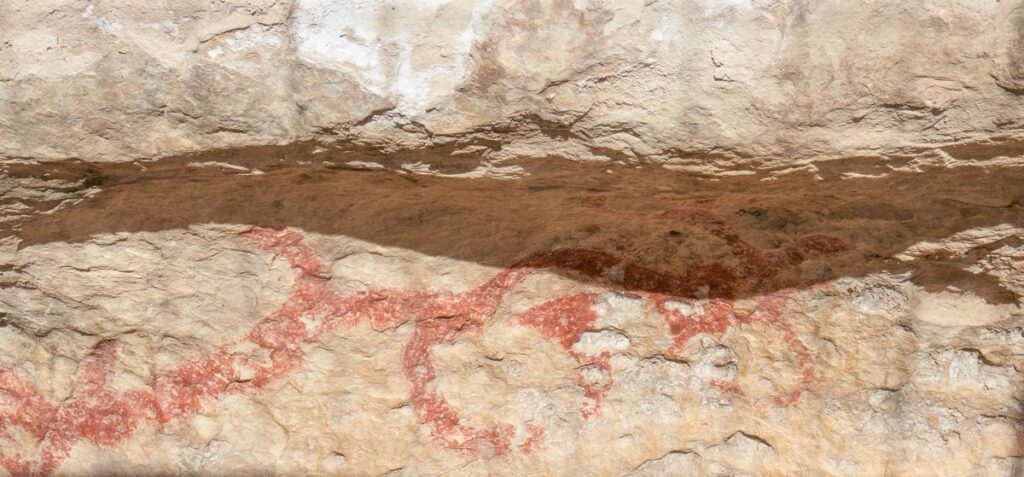
One of the most well-known Māori Rock Art sites in Aotearoa New Zealand lies in this deep limestone shelter. Decorated in many pre-European charcoal and kokowai (red ochre) drawings, this area was both a pre- and post-European occupation site for Māori with great cultural and spiritual significance to Ngāi Tahu Whānui.
Takiroa Māori Rock Art
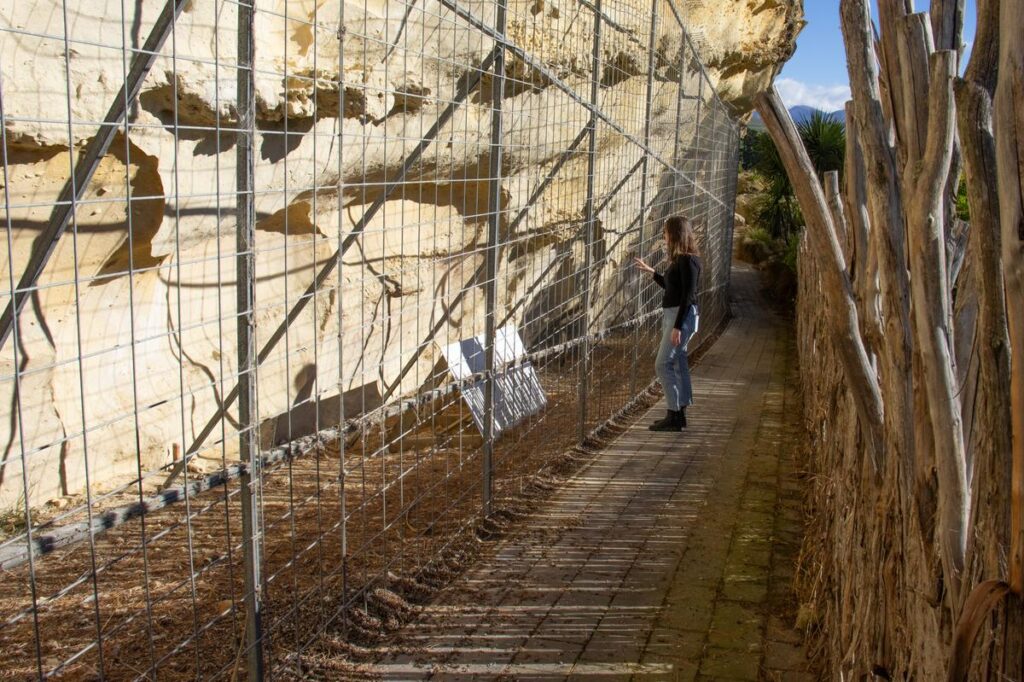
Another limestone shelter in the valley posed as the strategic position for warning against strangers, predators and bad weather. Now the walls contain charcoal and kokowai (red ochre) drawings, depicting forms such as birds, animals and people as well as depictions of European sailing ships and animals.
Vanished World Science Centre
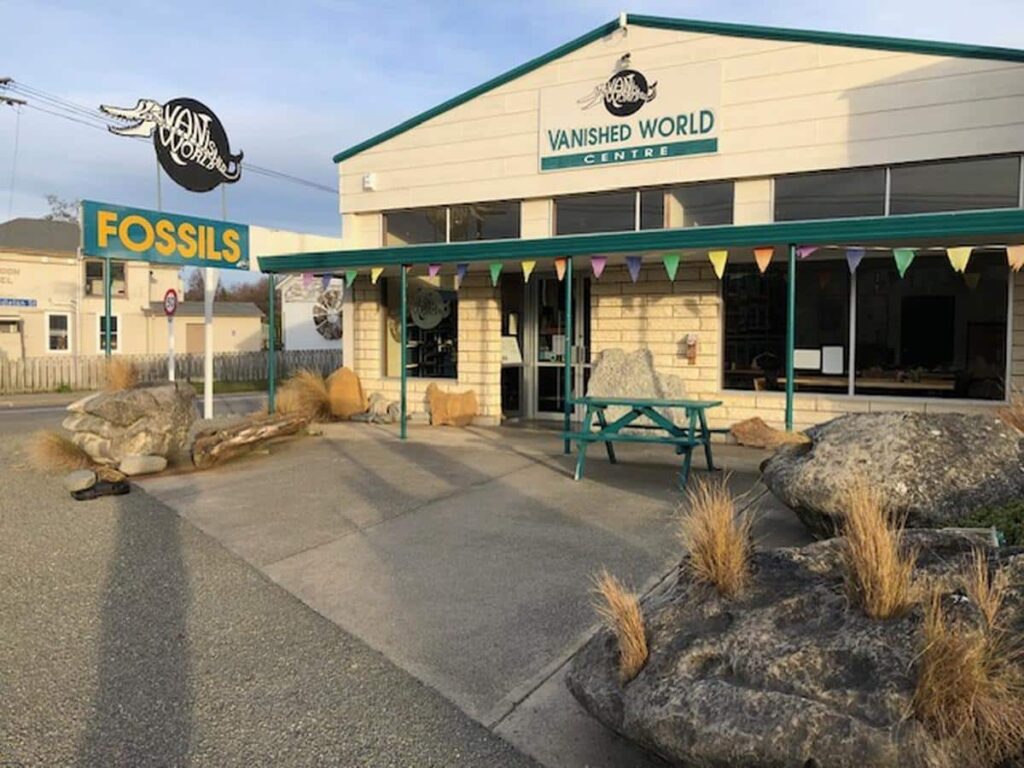
The Vanished World Centre houses an inspiring collection of fossils detailing the geology of the Waitaki District as well as displays that help explain and interpret the fossils, rocks, localities, and landforms in the area. There is even a fossil extraction room that allows children to gain a first “hands-on experience” of fossils.
Elephant Rocks
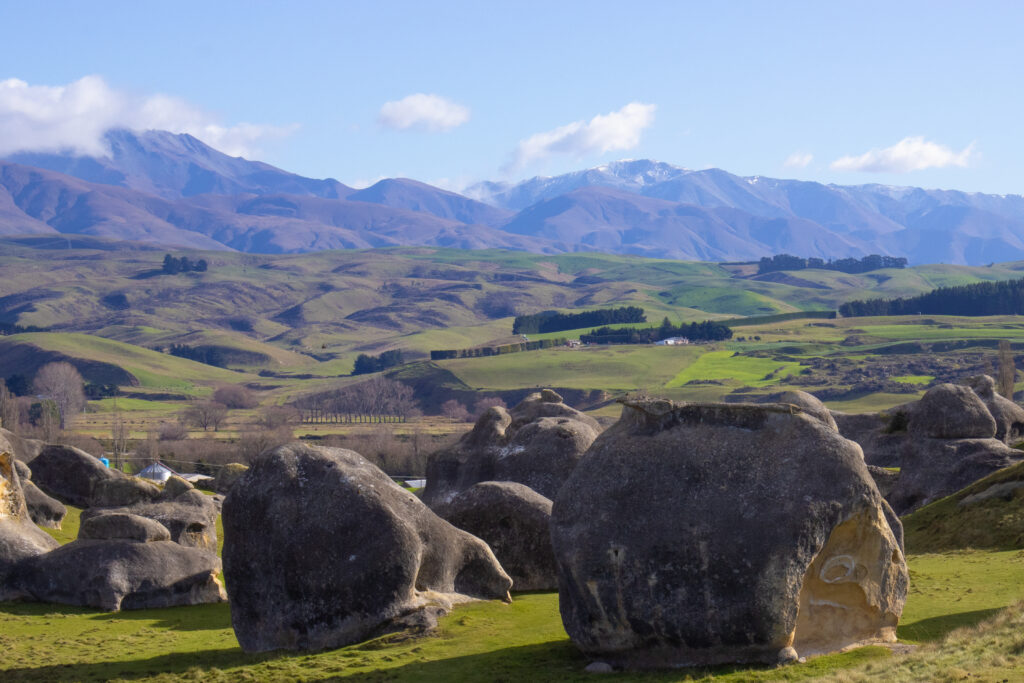
Elephant Rocks takes its name from the imposing limestone formations that resemble a herd of elephants. These rocks are the fossilised remains of a prehistoric seabed from over 25 million years ago, formed when seas covered what is now Te Riu-a-Māui/Zealandia. They were formed by weathering, tectonic processes, changes in sea level and erosion. Elephant Rocks is a stunning geological site which overlooks the valley and a must-do on your tour.
Anatini Fossil
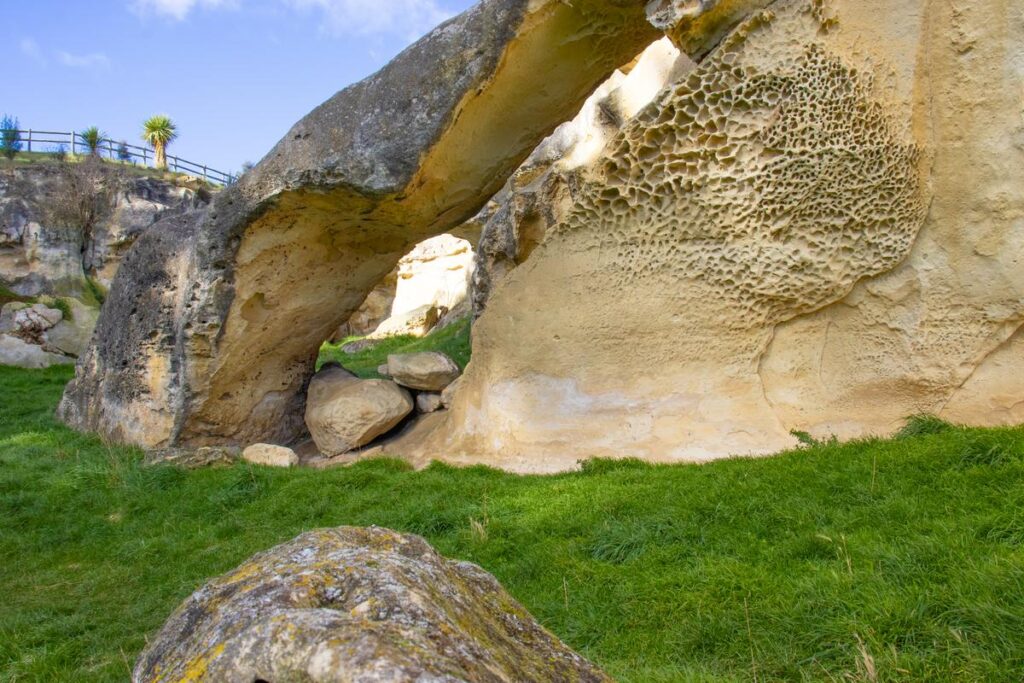
Anatini is a narrow, sheltered valley where you can see the fossil-bones of an ancient baleen whale partially embedded in limestone that formed around 25 million years ago, when this area lay about 100 metres underwater. This site is also known for being used as the backdrop for Aslan’s camp scene in the 2005 film adaption of C.S Lewis’ treasured classic ‘The Chronicles of Narnia: The Lion, the Witch and the Wardrobe’.
Valley of the Whales
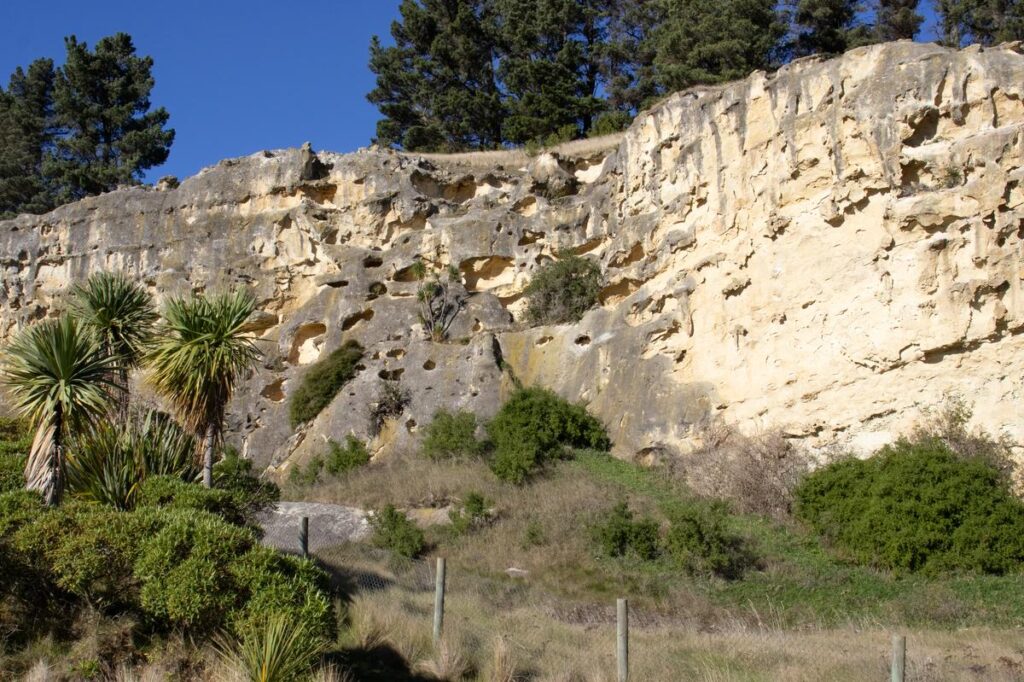
Hop off the trail and wander through the Awamoko Valley to view layers of sediment in the limestone and greensand cliffs formed over the last 23-29 million years by the Awamoko stream. There are many fossils from this area which help to create a picture of the life that thrived in this area such as the extinct ‘giant’ kairuku penguin.